Coffee Shop UGC Ads That Show the Real Drink
Coffee shop UGC ads need a real drink, a clear ordering path and an honest hook. Try three shootable concepts, including a playful AI latte-art cut.
Coffee shop UGC ads work best when a real drink is the point, not a stranger pretending to be a regular. Film the cup being made, give the viewer one reason to visit, then show where to order. An AI coffee-art shot can make a playful opening, but it shouldn’t stand in for something your barista actually serves.
Start with a drink someone can order
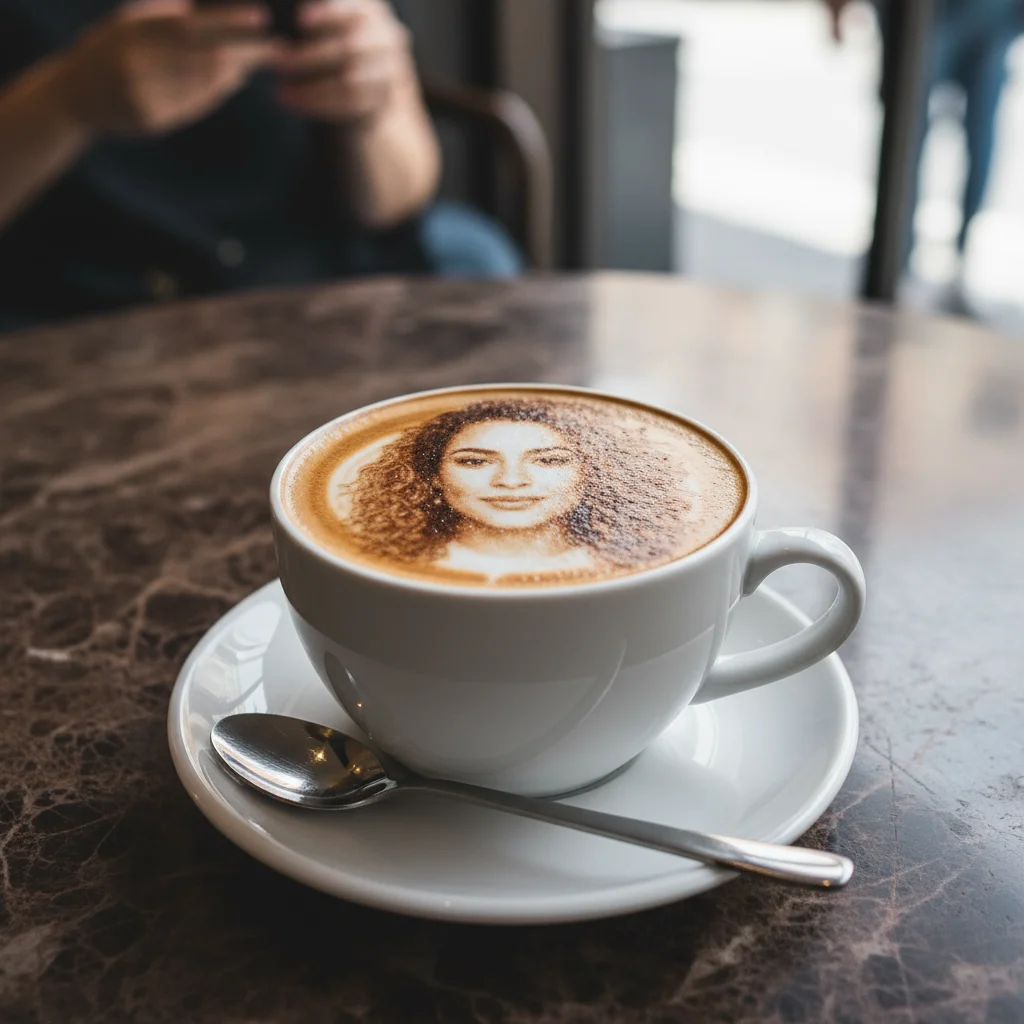
A close-up of a latte with a face printed in the foam stops a scroll. It also asks a question: can I buy that? If the answer is no, don’t put it beside a price or make it the whole ad. Treat the visual like a daydream: a quick fantasy cut before the camera comes back to the barista setting down the actual cup on the actual counter, with the drink name visible. That cut? The joke.
That split matters for a local café. A pretty frame might earn a pause; an honest frame helps someone decide if the trip is worth it. Show the size of the cup in a hand. Let the viewer see the milk being poured and the pastry case, if the pastry case is part of the offer. No real footage? Shoot it first. Then write the script. Mystery product. Bad ad.
The coffee art effect turns a portrait into a face in latte foam. For a café ad, I’d use it as a one-beat visual hook or a staff introduction, not a demonstration of the menu. A portrait of the person actually working that shift is funnier than a generic model. Get their permission before using the photo. Keep the cup with the imagined face clearly separate from the cup you sell.
Three cafe UGC ad angles with a real payoff
The order reveal. Open on the receipt or the cup label: “What does an oat latte with orange syrup look like?” Cut to the pour and then the finished drink. Only use that flavor if it’s on your actual menu; swap in your real order otherwise. End on the counter or an accurate ordering screen. A question with a payoff.
The regular’s route. Walk through the door, frame the menu board for a beat, then show the handoff at the pickup spot. You don’t need someone to say, “I come here every day.” That line sounds like a testimonial, and a hired actor shouldn’t be passed off as a customer. A staff member can narrate the route plainly: “Order here; pickup is by the window.” Useful. Especially for a hard-to-find café.
The staff face in the foam. Start with a real barista waving at the camera. Cut to an AI latte-art portrait of that same person, then back to their real pour. The cut sells the joke. No one should leave thinking the café prints faces on coffee. Put “AI coffee art” on screen if there’s any chance the visual could be mistaken for an actual menu item. Then get out of the way and show the drink.
TikTok’s Top Ads dashboard lets you look through ad examples by region and objective, then sort by reach or CTR. Use it to study openings, not to borrow a stranger’s claim about their café. The live results vary; a hook you see today is research, not proof that your own version will sell more coffee.
Shoot and cut one short version first
- Write the offer in one line. “Our iced latte is on the menu all week” works only if that’s true at your shop. For a new item, write the exact menu name and the dates you will actually serve it on a note beside your camera before the shoot so you do not edit a promise into a video that the counter cannot keep. Don’t invent a discount just to give the ending energy.
- Capture the physical proof. Get an overhead of the cup, a tight pour and a wide shot of the counter or storefront. Hold each shot steady long enough to cut on an action. Ask before filming customers or their conversations; the steam doesn’t need extras.
- Make the playful frame. If the staff-portrait angle fits, build the coffee-art visual on Trendai, then place it between two real shots. One insert. Enough. You can also start from a photo for another visual direction, but keep any generated image distinct from menu footage.
- Edit for a silent first watch. Put the drink name where a viewer can read it without covering the cup. Caption spoken words, check the frame with the app controls visible and cut the dead air before the first pour. Watch on your phone, not just in the editing preview.
- End with a useful action. “Find us on Main Street” is better than “run, don’t walk” if the real problem is finding the door. Add the actual address or ordering path in the post and check it before spending on distribution.
For paid placement, TikTok’s in-feed ad specifications recommend a vertical 9:16 file for non-Spark ads, at least 540 by 960 pixels. That makes the countertop edges worth checking: a horizontal shot of the whole espresso machine can leave the drink tiny in a vertical crop. Get closer. Film the handoff. Don’t crop the only readable item name out of the frame.
Keep the creator voice honest
UGC-style is a shooting style, not permission to fake a customer. If you pay a creator, agree on the lines they can say, the footage you can reuse and how the partnership will be disclosed. If the voice is synthetic, avoid first-person taste claims like “I tried it and loved it.” A prompt can’t taste coffee. For the broader disclosure problem, see our guide to AI UGC ads without fake reviews.
A café has a better advantage than an AI spokesperson: the cup exists. Let a staff member say what’s in it and show the handoff. If you use a generated foam portrait, label the trick where it appears rather than burying a note at the end. Gag first. Real order last.
Before you post, mute the edit and show it to someone who doesn’t know the menu. Ask them what they think they can buy. If they point at the face in the foam, move the AI insert earlier, cut it shorter and make the real drink the final close-up.